
Quick Reflex Tactical Arena
Review
Quick Reflex Tactical Arena stands out for its clean visual style and tight gameplay loop. Each arena presents a new puzzle of movement and timing, and the environment-based tools add welcome variety. The lack of clutter lets you focus entirely on outsmarting opponents. While it may not offer a deep story or multiplayer, the core experience is polished and satisfying. It is an excellent choice for players who enjoy testing their tactical thinking under pressure.
Full story
Arena Design & Flow
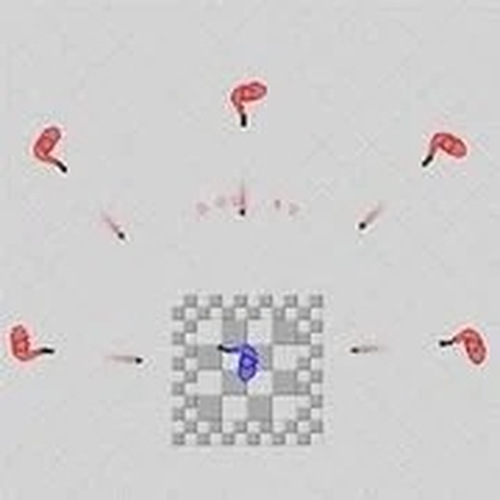
Each arena in Quick Reflex Tactical Arena is a self-contained space with distinct layouts. Some arenas feature narrow corridors that force close encounters, while others offer open areas with obstacles for cover. The design encourages players to constantly adjust their position based on the environment. Moving between arenas introduces new challenges, as the geometry changes how you approach each encounter. The pacing remains brisk, with rounds lasting only a few minutes, keeping the action focused and intense.
Control Scheme & Responsiveness
The controls are straightforward: movement keys let you navigate the arena, while a dedicated action button allows you to interact with objects or perform a quick strike. A look-around function helps you monitor your surroundings without losing momentum. Switching to fullscreen mode or muting audio is handled through simple keyboard shortcuts, so you never have to pause the action. The responsiveness of the controls is critical, as even a slight delay can mean the difference between success and failure. Players who master the controls gain a clear advantage in reading and reacting to opponents.
Strategic Depth Through Environment
Beyond basic movement, the environment plays a central role in shaping your strategy. Objects scattered around arenas can be picked up and thrown to create openings or disrupt an opponent's approach. Some objects are more effective at range, while others work best when used up close. Learning which items are available in each arena and how to use them effectively adds a layer of tactical thinking. The game rewards players who experiment with different approaches rather than relying on a single tactic. This variety keeps each playthrough fresh and encourages repeated attempts to refine your strategy.
Visual Style & Atmosphere
The visual presentation uses bold colors and clean lines to create a distinct look that is easy to read during fast-paced action. Character models are simple but expressive, making it easy to track movements at a glance. The arenas are lit evenly, so there are no hidden areas that give an unfair advantage. The overall aesthetic supports the gameplay by keeping visual clutter to a minimum. This clarity helps players focus on the tactical decisions rather than being distracted by unnecessary details. The art style also contributes to a lighthearted tone that fits the game's emphasis on skill rather than violence.
Replayability & Skill Progression
Because each arena can be approached with different tactics, the game naturally encourages replaying levels to try new strategies. There is no single correct way to overcome a challenge; instead, players develop their own methods based on their strengths. The learning curve is gradual, with early arenas teaching basic mechanics and later ones introducing more complex environmental interactions. This progression keeps the experience engaging for both newcomers and experienced players. The absence of random elements means that every success comes from player skill, making each victory feel earned. This design philosophy aligns with the core appeal of skill-based games.




Reader Comments
Sign in to comment
You must be logged in before posting a review or rating.
No account? Create one
No comments yet. Be the first to comment!