
Cosmic Dash: Infinite Speedway
Review
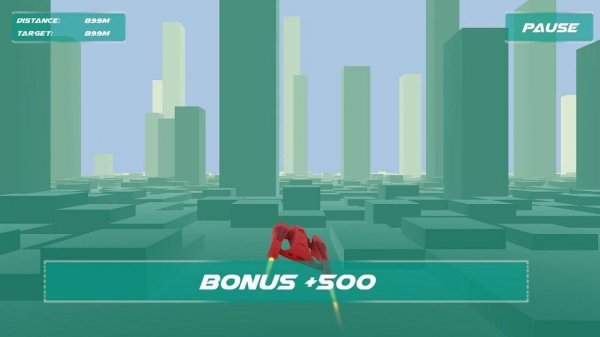
Cosmic Dash: Infinite Speedway delivers a focused arcade experience that prioritizes skill development. The track's dynamic obstacle patterns require quick thinking and steady hands, while the gradual speed increase ensures the challenge remains engaging. Power-ups add a strategic layer, forcing players to balance risk and reward when collecting them. The minimalist controls make it accessible, but mastering the timing at higher speeds offers depth for dedicated players. The visual presentation, with its bright neon trails and cosmic backgrounds, complements the high-energy gameplay without becoming distracting. For fans of endless runners looking for a space-themed alternative, this title provides a solid, replayable option.
Full story
Track Design & Atmosphere
The space track in Cosmic Dash: Infinite Speedway is a constantly evolving corridor of neon-lit pathways and floating debris. Unlike static courses, this environment shifts with each run, presenting new arrangements of barriers and open sections. The visual backdrop features swirling nebulas and distant stars that create a sense of depth, making the high-speed travel feel immersive. Players must adapt to the changing layout while maintaining focus on the path ahead.
Vehicle Handling & Controls
Controlling the jet relies on simple tap or click inputs that respond instantly. The vehicle moves laterally across the track, requiring precise adjustments to slip through narrow gaps. There is no acceleration pedal or brake—speed is constant, increasing gradually as the run progresses. This design keeps the focus on timing and spatial awareness rather than complex button combinations. New players can pick up the basics within seconds, while veterans will appreciate the fine control needed at higher speeds.
Obstacle Patterns & Difficulty Curve
Obstacles appear in sequences that grow more intricate over time. Early runs feature widely spaced barriers that allow room for error, but later stages introduce tighter clusters and faster-moving hazards. The game introduces new obstacle types as distance increases, preventing the experience from becoming repetitive. Learning to recognize these patterns and anticipate their placement is key to extending each run. The difficulty ramps up smoothly, ensuring that players always have a reason to try again.
Power-Up System & Scoring
Scattered along the track are collectible items that provide temporary advantages. Speed boosts increase velocity for a short period, while score multipliers enhance the points earned from distance traveled. Some power-ups may offer brief invincibility, allowing players to pass through obstacles without penalty. Collecting these items requires steering toward them, which sometimes means taking a riskier path. The scoring system rewards both distance and the number of power-ups gathered, encouraging aggressive play.
Endless Progression & Replay Value
Since there is no final level or boss, the goal is purely personal improvement. Each session generates a unique track layout, so no two runs feel identical. The game may track high scores and distances, allowing players to measure their progress over time. This structure appeals to those who enjoy refining their skills and chasing incremental gains. The lack of a predetermined endpoint means the challenge only ends when the player makes a mistake.
Visual Style & Audio Feedback
The art direction emphasizes bright colors against the dark void of space, with glowing trails following the jet. Audio cues accompany key events such as collecting a power-up or colliding with an obstacle, providing immediate feedback. The soundtrack features energetic electronic beats that match the pacing of the game. These elements combine to create a cohesive atmosphere that supports the core gameplay loop.







Reader Comments
Sign in to comment
You must be logged in before posting a review or rating.
No account? Create one
No comments yet. Be the first to comment!